Alexander Rostov and Anna Urbanova’s relationship
A Gentleman in MoscowAlexander Rostov and Anna Urbanova’s relationship is a sustained intimacy built not on uninterrupted courtship but on surprise, separation, and repeated recognition. First drawn together in 1923, they meet again after Anna’s career and fortunes have collapsed; their private reunion grows alongside her return to acting. Ultimately, the relationship becomes part of a family history that gives the Count’s years at The Metropol their deepest meaning.
First Encounter and Uneven Courtship
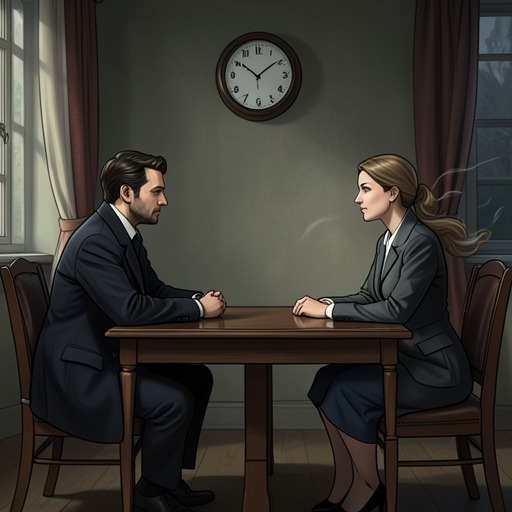
The relationship begins in 1923 with the Count feeling that he is always a step behind Anna. A dinner that might have followed the predictable course of conversation and a polite farewell instead moves through unexpected confidences. When the Count speaks of home, his sister, his school years, and the memories held by the table before them, Anna comes around to him, takes him by the collar, and kisses him. The initiative is hers; his accustomed poise gives way to surprise.
The conversation has already unsettled the Count’s first impressions of her. As they talk about food, Anna recalls growing up in a fisherman’s house, where the family ate what could not be sold. She remembers slipping away from her mother at dusk, walking down her village’s sloping streets to meet her father on the beach, and helping him mend his nets. Her wry description of the fish they ate as the bottom of the sea opens into a childhood quite unlike the glamorous image suggested by her public life. For the Count, hearing this story renews the case for withholding judgment: a brief encounter cannot contain a person’s contradictions or history.
The intimacy that follows is as unexpected as the kiss. Anna undresses and later tells him, “As you go, be sure to draw the curtains.” The Count obeys, gathers his clothes, draws the curtains, and, before leaving, picks up her ivory blouse and hangs it on its hanger. His small act of care follows his departure from her room rather than undoing it. He has learned that being a step behind can be more relaxing and more exciting than anticipating every turn, but Anna’s parting instruction still gives their first encounter a note of dismissal.
Reunion After Reversal
The narrative later opens on the pair together again, then turns back to explain how they reached that intimacy. The Count’s own path has scarcely changed: he continues to travel between his bedroom and the Boyarsky. Anna’s has twisted sharply. After director Rosotsky falls from favor, she avoids appearing with him and praises the work of other directors. The arrival of talking pictures brings a further reversal: audiences who had imagined her speaking in dulcet tones are unprepared for her husky voice. In the spring of 1928, at twenty-nine, she is regarded as a has-been.
Within months, the furnishings of Anna’s former life have been reclaimed, including the gilded chairs, painted armoires, and Louis Quatorze dresser. She loses her mansion and Peterhof dacha and is left with two trunks of clothes; although she has the fare to return to her hometown outside Odessa, she chooses instead to live in a one-room apartment with her sixty-year-old dresser. Her refusal to go home makes the change in her circumstances plain, but it also shows that she intends to remain in the world where her career once flourished.
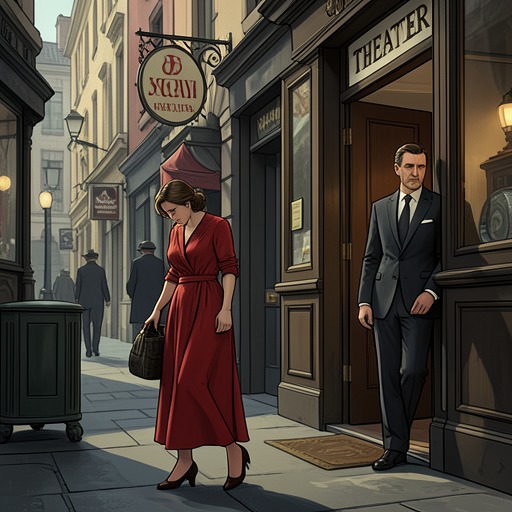
In November 1928, about eight months after she loses the mansion, the Count sees Anna enter the Boyarsky in a red sleeveless dress and high heels. He is pouring water for an Italian importer and, startled by her appearance, apologizes and tries to mop his lap with a napkin. Anna tells Andrey that a guest will join her; forty minutes later the Count arrives. He has never been an early starter, she observes, and waves him toward the stairs. She is staying in room 428, a modest room with a small sitting area and two windows over the trolley tracks on Teatralny Proyezd. Caviar and vodka on ice furnish the scene, an effort to make an impression within narrow means. The two drink to old times, and a renewed friendship begins.
The Confederacy of the Humbled
The Count and Anna recognize in one another a shared experience of falling from grace. The narrative calls their fellowship the Confederacy of the Humbled: people who have known beauty, influence, fame, or privilege as something borrowed rather than permanently possessed. They are not easily impressed, quick to envy, or eager to take offense. Their changed circumstances do not drive them out of society; instead, they alter how they meet it. The Count’s toast to the dogs and Anna’s agreement mark their recognition of a kinship that requires no outward sign.
Over the next year and a half, Anna visits The Metropol every few months. She contacts directors she has known, invites one to dinner at the Boyarsky, and, having learned from her earlier arrival, makes sure to reach the restaurant two minutes after her guest. She praises his films with specific attention, recalling a subtle scene involving a secondary character, then says goodnight rather than inviting him for a drink. The guest leaves wondering whether she might suit a role. After changing into a simple dress and hanging up her gown, Anna waits in her room for the Count. The pattern makes her renewed intimacy with him part of a private life she builds alongside her professional efforts.
Anna’s Return to the Screen
One dinner leads to a small part in a film: Anna plays a middle-aged factory worker whose fellow workers are preparing to explain an impending production shortfall to Party leadership. With her hair drawn back in a kerchief, her character argues for pressing on; the women redouble their efforts and exceed their quota. The role turns away from Anna’s former screen image. She is no longer presented as young or ravishing, but as proud and unbent, and her husky voice becomes an asset: it conveys the lived experience of an ordinary working woman.
At the premiere, a senior Ministry of Culture official who had once admired Anna is moved by her performance. He praises it to directors and sends lilies to her room when she is in Moscow. The narrative resists treating his admiration as the sole explanation for her comeback. Anna is a trained stage artist; she appears on time, knows her lines, and does not complain. As official taste favors realism and perseverance, roles become available for an actress with seasoned beauty and a distinctive voice. Her recovery thus depends both on opportunities and on qualities she has cultivated herself. The Count’s relationship with her unfolds alongside this return: he is not the author of her career, but the person she returns to after dinners that help reopen its possibilities.
Family, Memory, and Purpose
Years later, the Count tells Sofia how his friendship with her mother began. In 1922, after a heavyset man in the hotel barbershop clipped one of his moustaches, Anna came to his table in the Piazza and asked, in effect, the same question Sofia has just asked about what happened to it. That simple inquiry started their friendship. The anecdote makes an ungainly incident in the hotel’s everyday life the origin point of a relationship whose consequences reach far beyond it.
When Sofia asks whether he regrets returning to Russia after the Revolution, the Count answers by describing people who seem to appear at decisive moments in art, commerce, and the evolution of ideas, as if summoned by Life. He tells her that the only time Life needed him in a particular place at a particular time was when her mother brought her to the lobby of The Metropol. He would not exchange being in the hotel at that hour for the Tsarship of all the Russias. His answer gives Anna’s place in his life its fullest measure: their first question in the Piazza began a friendship, while her later arrival with Sofia made that friendship inseparable from fatherhood and the life he chose to lead.